
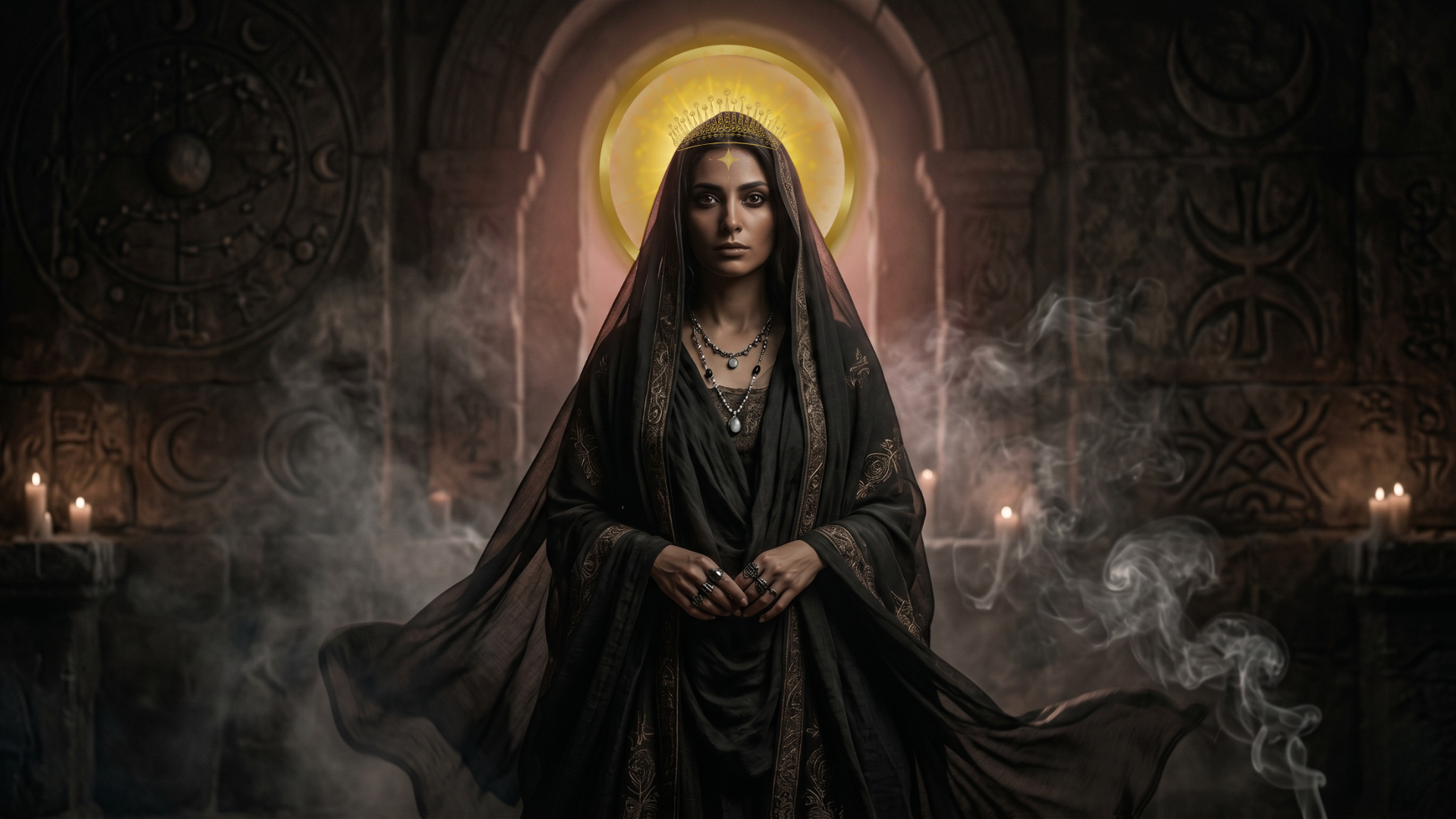
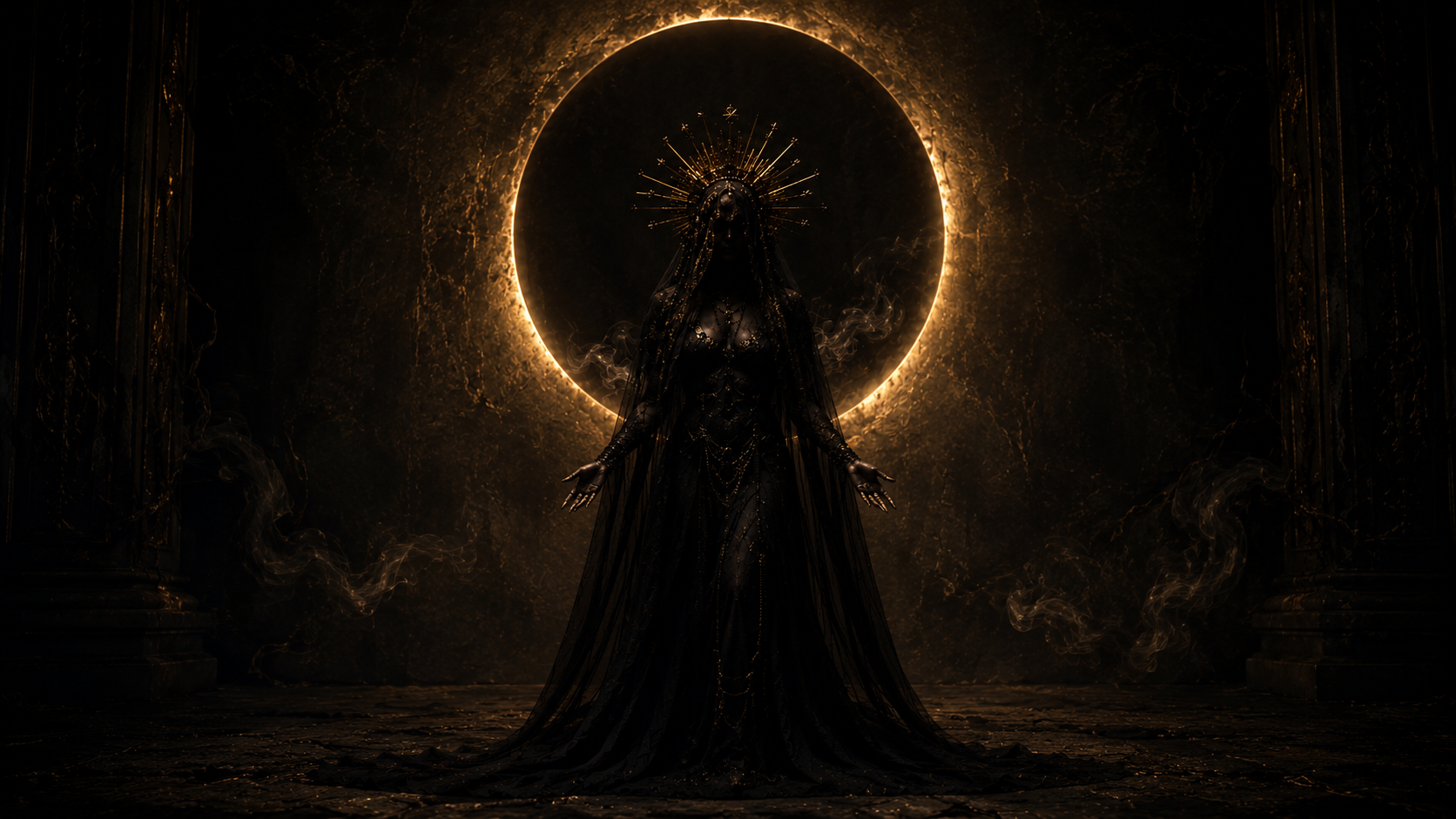
Understanding the Forgotten Side of the Feminine
The term “Dark Goddess” has become increasingly visible in modern spiritual spaces, feminine healing work, psychology discussions, and online conversations around feminine energy. Yet despite how often the phrase is used, it remains deeply misunderstood.
For some people, the Dark Goddess is reduced to aesthetics—black clothing, moon rituals, sensuality, occult symbolism, or the modern “dark feminine” trend circulating on social media. For others, the term itself feels threatening because the word dark immediately creates associations with negativity, evil, or emotional instability.
But the Dark Goddess was never originally about evil.
The “dark” in Dark Goddess refers to the unseen, the hidden, the unconscious, and the transformational. It refers to the parts of life and the feminine psyche that are difficult to control, difficult to categorise, and often difficult to confront. In spiritual and psychological traditions, darkness has historically symbolised mystery, inner transformation, death-rebirth cycles, emotional depth, instinct, grief, sexuality, rage, and the unknown.
Modern culture tends to glorify only the visible and polished aspects of femininity — softness, beauty, nurturing, emotional gentleness, and agreeability. But the feminine psyche was never designed to exist only in softness. Human beings are emotionally complex, and feminine consciousness contains far more than what society traditionally allowed women to express openly.
This is where the idea of the Dark Goddess becomes important.
The Feminine Was Never Meant to Be One-Dimensional
For centuries, women across cultures were conditioned to embody forms of femininity that were socially manageable. A “good woman” was expected to be emotionally accommodating, nurturing, forgiving, self-sacrificing, and agreeable. The more digestible she was, the more accepted she became.
At the same time, qualities such as anger, emotional intensity, strong boundaries, sensuality, ambition, or instinctive power were often treated as dangerous or undesirable. Women learned very early that certain emotions made them “too much,” while silence and emotional suppression made them easier to love.
Over time, this created a psychological split.
One part of the feminine self became socially acceptable — soft, composed, giving, emotionally available. The other part was buried beneath conditioning. That hidden part carried everything society could not comfortably hold within women: rage, grief, desire, instinct, emotional truth, sexuality, intuition, power, and even the longing for freedom.
The Dark Goddess represents the return of these disowned aspects of the feminine psyche.
Not the “evil feminine.”
The suppressed feminine.
The Real Meaning of Darkness in Spiritual Traditions
One of the biggest reasons the Dark Goddess is misunderstood is that modern culture interprets darkness only negatively. But spiritually, darkness has always carried a far more nuanced meaning.
Darkness is the womb before birth.
The soil before growth.
The night before dawn.
The unseen realm where transformation begins.
Even psychologically, human transformation rarely begins during comfort. Most profound emotional growth emerges during periods of uncertainty, grief, heartbreak, identity collapse, loss, burnout, or spiritual questioning. These are the moments where the old self begins dissolving, but the new self has not fully emerged yet.
The Dark Goddess governs these in-between spaces.
She represents the intelligence within endings, emotional depth, and inner transformation. While modern spirituality often focuses heavily on positivity, healing, and “high vibrations,” the Dark Goddess reminds us that genuine transformation also requires confrontation.
Not all healing feels peaceful in the beginning.
Sometimes healing first feels like grief. Sometimes it feels like anger.
Sometimes it feels like realizing how deeply you abandoned yourself just to remain accepted.
The Psychological Dimension of the Dark Goddess
The Dark Goddess can also be understood through psychology, particularly through the concept of the shadow self.
Psychologist Carl Jung described the shadow as the unconscious aspects of ourselves that we suppress because they feel socially unacceptable or threatening to our identity. The shadow is not inherently bad. It simply contains parts of ourselves we were taught not to express openly.
For many women, the shadow often contains emotional and instinctive qualities they had to suppress in order to feel safe, lovable, or accepted.
This is why so many women struggle with:
- chronic people-pleasing
- emotional numbness
- burnout
- resentment
- guilt around boundaries
- fear of being “too much”
- disconnection from intuition
- difficulty expressing anger honestly
These are not random emotional patterns. They are often the result of years of self-suppression.
The Dark Goddess archetype becomes relevant because it invites women to consciously meet these hidden parts of themselves instead of continuing to deny them.
This is not about becoming emotionally chaotic or destructive. It is about integration.
There is a major difference between repressing emotions and consciously understanding them. The Dark Goddess asks women to stop fearing their emotional depth and begin developing a relationship with it.
Why Feminine Rage Is So Deeply Misunderstood
One of the most important aspects of Dark Goddess work is the reclamation of feminine rage.
Women have historically been discouraged from expressing anger openly because anger disrupts the image of ideal femininity. An angry woman is often labelled difficult, unstable, bitter, dramatic, masculine, or emotionally unsafe. As a result, many women learn to suppress anger instead of processing it consciously.
But suppressed anger does not disappear.
It often transforms internally into anxiety, depression, chronic guilt, resentment, emotional exhaustion, numbness, self-silencing, or hyper-independence.
The Dark Goddess does not glorify uncontrolled rage.
She teaches a conscious relationship with anger.
Anger itself is not unhealthy. In many cases, anger is information. It reveals where boundaries have been crossed, where emotional truth has been denied, where self-respect has been compromised, or where needs have remained unheard for too long.
The problem is not anger.
The problem is unconscious anger.
Dark Goddess work asks women to stop viewing emotional intensity as something shameful and instead understand what their emotions are trying to reveal.
The Difference Between the Dark Goddess and the “Dark Feminine” Trend
Modern social media has dramatically oversimplified the concept of the Dark Goddess. Today, the “dark feminine” is often marketed through aesthetics, seduction strategies, emotional detachment, manipulation tactics, or power dynamics in relationships.
But genuine Dark Goddess work has very little to do with performance.
It is not about appearing mysterious.
It is not about becoming emotionally cold.
It is not about controlling people.
And it is certainly not about weaponizing femininity.
The real ‘Dark Goddess’ work is deeply internal and psychologically demanding.
It often involves confronting grief, healing trauma, dismantling false identities, understanding nervous system patterns, processing emotional pain, learning boundaries, reconnecting with intuition, and becoming radically honest with oneself.
The real work is rarely glamorous.
In fact, it is often uncomfortable because it requires women to stop performing versions of themselves that no longer feel authentic.
Why the Dark Goddess Is Rising Again
The growing interest in the Dark Goddess reflects something much deeper happening collectively among women.
Many women are exhausted from constantly performing emotionally acceptable femininity while remaining disconnected from themselves internally. Modern women are navigating enormous contradictions. They are expected to be independent but not intimidating, sensual but not excessive, successful but overly nurturing, and emotionally aware but endlessly accommodating.
Eventually, these contradictions create emotional fragmentation.
This is why many women today are drawn towards the shadow work, somatic healing, archetypal psychology, nervous system healing, and feminine spirituality that feels more honest and embodied rather than purely performative.
The Dark Goddess emerges when the old identity can no longer survive. She appears during the collapse of illusion. Not to destroy women, but to return them to themselves.
Reclaiming the Forgotten Feminine
The Dark Goddess is not the opposite of the Divine Feminine. She is the part of the feminine that was forgotten, suppressed, feared, or misunderstood.
She represents emotional truth over performance. Wholeness over perfection. Integration over suppression.
The Dark Goddess reminds women that healing is not only about becoming softer, calmer, lighter, or more spiritually polished. Sometimes healing also involves confronting grief, acknowledging anger, reclaiming instinct, honouring boundaries, and telling the truth about who you really are beneath conditioning.
Ultimately, the Dark Goddess is not about becoming darker. She is about becoming whole.




0 Comments